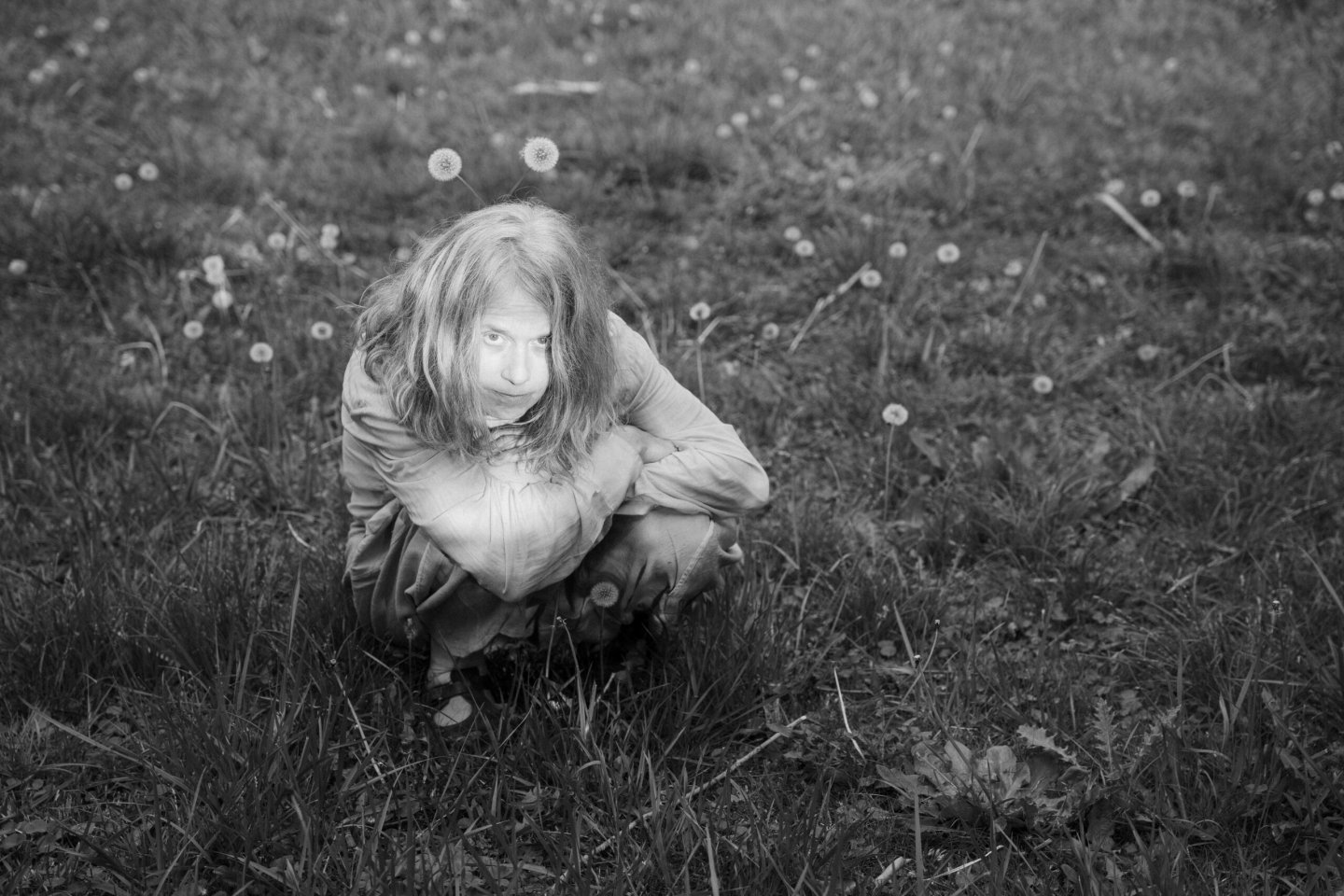
Juana Molina is one of the most original voices in contemporary music—a true architect of experimental pop who built her own language from fragments of folk, electronics, repetition, and silence.
Her debut album Rara introduced a quiet rebellion: sparse, curious songs that didn’t quite fit anywhere. Critics were unsure what to make of it. That uncertainty, it turns out, was the point.
She moved to Los Angeles and began reshaping her process from the ground up—looping guitar lines, layering voice and rhythm, treating repetition not as constraint but as hypnosis. The breakthrough came with Segundo, where her sound fully crystallized: intimate, cyclical, and strangely infinite.
What followed on Domino Records—including Tres Cosas—earned international acclaim, with The New York Times naming it one of the Top Ten Albums of 2004.
Her later work with Crammed Discs—Wed 21 (2013) and Halo (2017)—refined her sound even further, stripping songs down until only essential motion and texture remained. The ForFun EP (2019) added a sharper, almost punk edge, while the 21st anniversary edition of Segundo (2022) reminded listeners how far ahead of its time that record had been.
Then, in 2025, came DOGA. Released after eight years without new material and nearly six years in the making. Every signature element is there—unexpected melodic turns, organic electronics, austere harmonies that seem to hover rather than resolve, lyrics layered like concentric circles—but pushed further into unfamiliar territory. It’s music that resists identification on purpose, constantly dissolving into something just out of reach, yet unmistakably hers.
On stage, Molina brings this world to life through live looping, acoustic guitar, effects, and voice, building entire sonic environments in real time.
One of the most extraordinary singers around, veering on genius.
